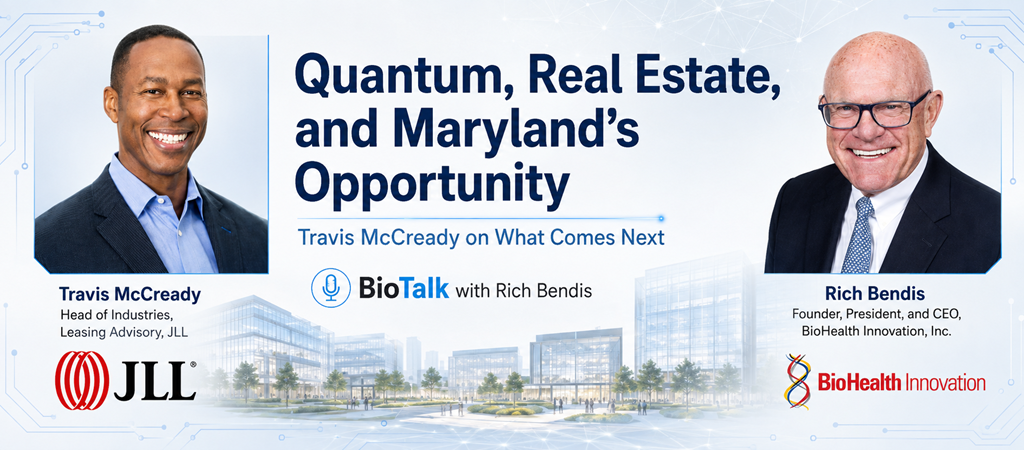
 In this episode of BioTalk with Rich Bendis, Travis McCready, Head of Industries, Leasing Advisory at JLL, joins the conversation to discuss quantum computing, why real estate professionals are paying attention, and what this emerging technology could mean for regions like the BioHealth Capital Region.
Travis explains that quantum computing should be understood as an enabling technology, much like earlier waves of innovation that helped shape new industries, companies, and regional economies. While the field is still developing, he discusses why quantum is no longer just a distant concept and why real estate, infrastructure, workforce, and sector-specific use cases will all play a role in determining which regions lead.
The conversation explores the industry’s most likely to benefit from quantum first, including government and cryptography, life sciences, and finance and insurance. Travis also discusses how quantum computing could support areas such as molecular modeling, materials science, complex risk modeling, and other problems that involve large numbers of interconnected variables.
Listen via your favorite podcast platform:
Apple: https://apple.co/4ggQLHM
Spotify: https://bit.ly/465vcoY
iHeart Podcasts: https://ihr.fm/4670fkc
Amazon Podcasts: https://amzn.to/3vpZDHI
YouTube Music Podcasts: https://bit.ly/4cE5CuP
TuneIn: https://bit.ly/4xIayXR
Rich and Travis also look at the real estate side of quantum, including what makes quantum facilities different from traditional data centers or life sciences buildings. Travis explains why energy, vibration sensitivity, floor loads, electromagnetic shielding, a skilled workforce, and proximity to key research and industry assets all matter when regions consider quantum site selection.
The episode also focuses on Maryland’s position in the emerging quantum economy. Travis and Rich discuss the state’s strengths in life sciences, federal agencies, defense, cybersecurity, cryptography, research universities, and companies such as IonQ. Travis emphasizes that Maryland’s opportunity is not only in building quantum assets, but in translating those assets into commercial activity, workforce development, company formation, and long-term economic growth.
Editing and post-production work for this episode was provided by The Podcast Consultant.
Travis A. McCready is Head of Industries, Leasing Advisory in the Americas for JLL and Chair of the firm’s Global Life Sciences Advisory Board. In this role, he oversees brokerage and advisory work across JLL’s key global industry verticals, including life sciences, healthcare, data centers, energy, security and defense, technology, and higher education. He is also a member of JLL’s Innovation Districts Practice, providing strategic advisory services to innovation districts around the world. Travis has more than 25 years of experience leading public, private, and nonprofit ventures focused on science and technology-based real estate and innovation infrastructure. He also serves on several boards and advisory groups across the innovation, life sciences, academic, and energy sectors.
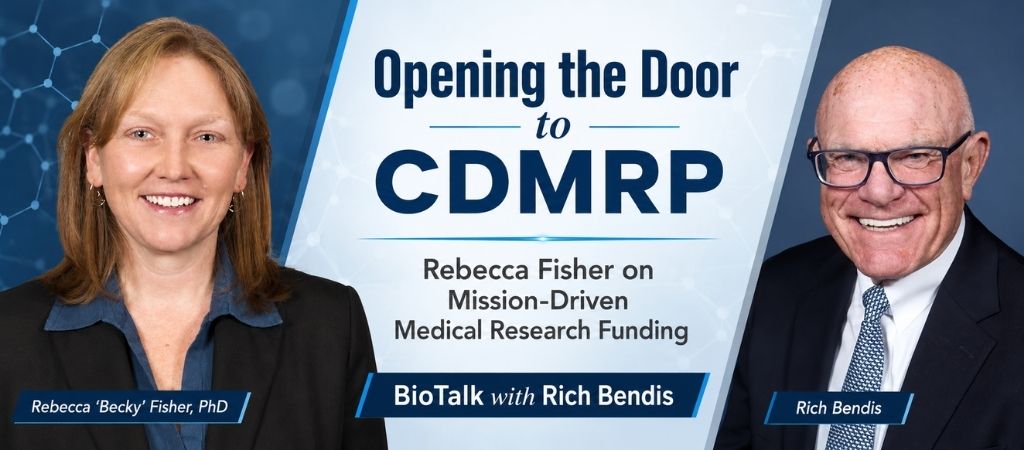
 Opening the Door to CDMRP: Dr. Rebecca Fisher on Mission-Driven Medical Research Funding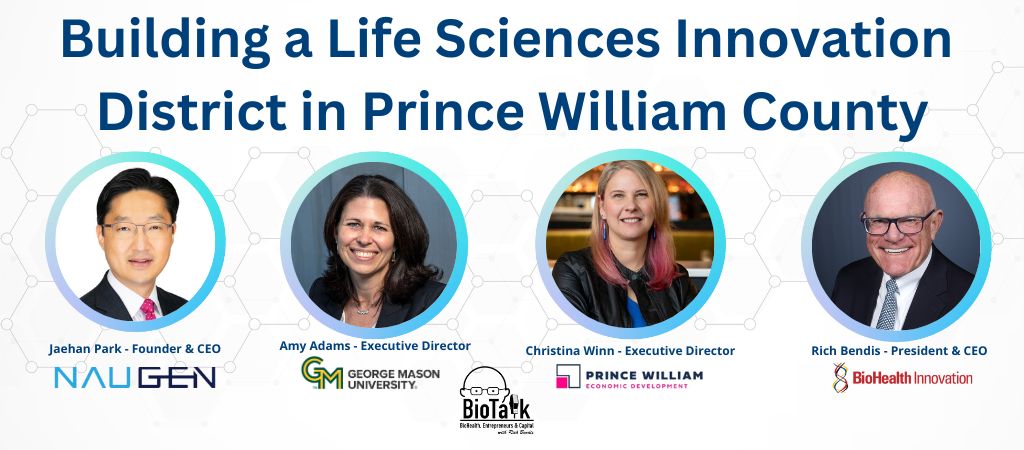
 This episode of the BioTalk with Rich Bendis Podcast brings together leaders from industry, academia, and economic development to unpack the vision behind a new life sciences Innovation District anchored in Prince William County. With introductions to NAUGEN, George Mason University’s Institute for Biohealth Innovation, and the Prince William County Department of Economic Development, setting the stage for how each organization contributes to the district’s foundation. The guests discuss the life science assets, research strengths, and translational capabilities that define the district and explain why it is well-positioned to support biotechnology and advanced R&D companies.
 Secretary Juan Pablo Segura joins BioTalk for a conversation about Virginia’s growing position in the biohealth economy and the statewide strategy behind it. He outlines the significance of the new partnership with AstraZeneca, Lilly, and Merck, including up to $120 million in private investment to create a workforce development center and expand the Commonwealth’s life sciences capacity. Segura talks through how Virginia approaches company recruitment, what investors are responding to, and why the state is seeing increased interest from biomanufacturing and advanced R&D companies. He also discusses Virginia’s use of public-private partnerships to accelerate industry growth, strengthen the talent pipeline, and support emerging hubs across the Commonwealth. The conversation closes with a look at Virginia’s role in the BioHealth Capital Region and how the regional identity helps amplify the state’s message as it continues building a competitive biohealth ecosystem.
 Getting a biotech company off the ground takes more than science; it takes strategy, funding, and the right network.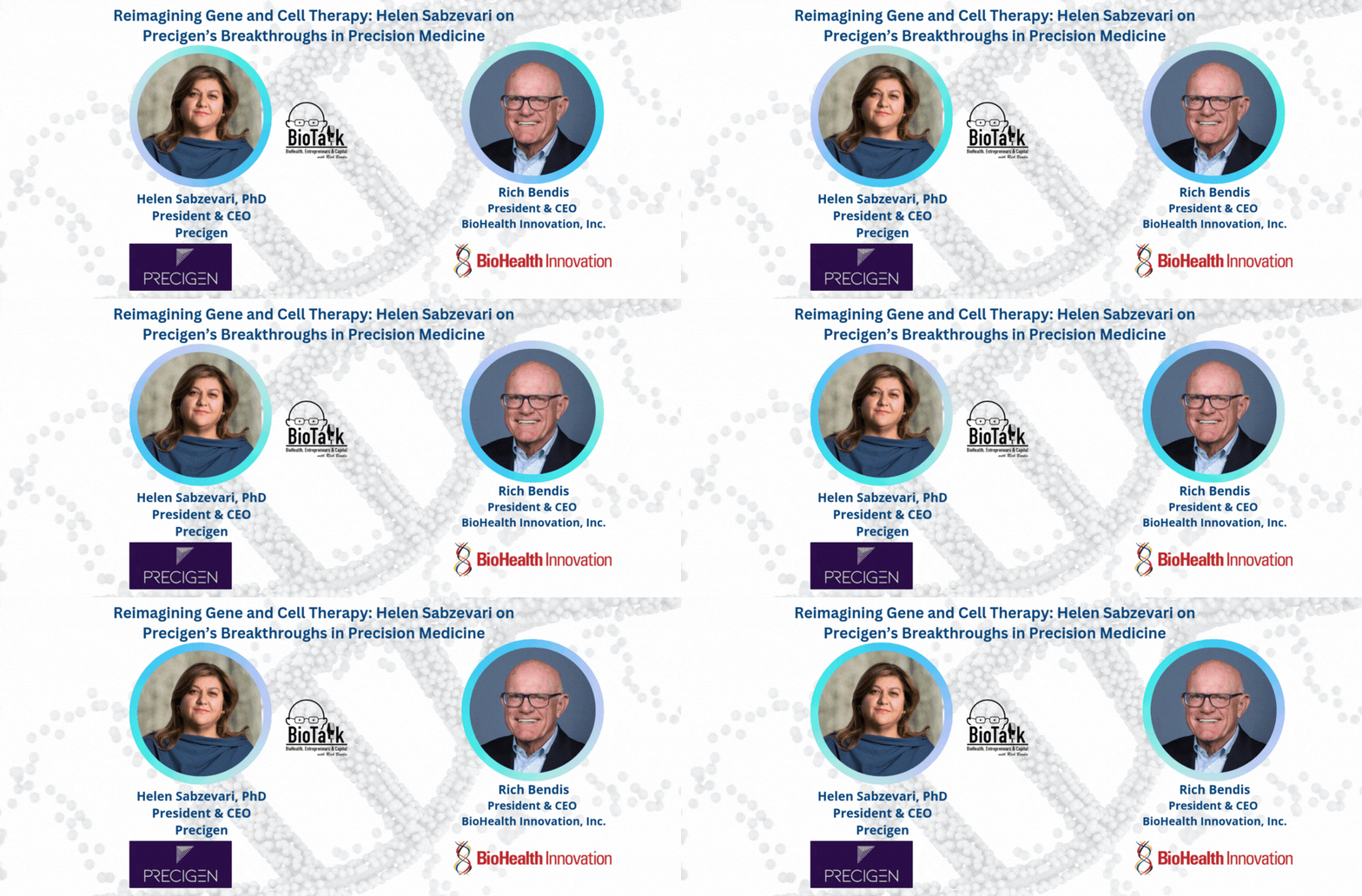
 In this episode of BioTalk, Rich Bendis welcomes Dr. Helen Sabzevari, President and CEO of Precigen, to discuss the company’s cutting-edge science in gene and cell therapy. Dr. Sabzevari shares how Precigen’s unique AdenoVerse® platform has powered the development of PRGN-2012, a potential first-in-class therapeutic currently under FDA priority review for the treatment of adults with recurrent respiratory papillomatosis (RRP), a rare and devastating disease. She also highlights advances across Precigen’s broader pipeline in immuno-oncology and autoimmune disease and reflects on how Maryland’s BioHealth Capital Region has supported the company’s innovation and growth.